Learning from Colorado’s Mistakes: Succession Planning Forum Feb. 25
The Front Range of Colorado has rapidly grown from rural land to a near-continuous city stretching from Fort Collins to Pueblo. What used to be open farm and ranch land 50 years ago has become miles of subdivisions.
With the slow but steady growth we’re seeing here, there is another way to move forward. Park County Open Lands offers an opportunity to do better. On Wednesday, February 25, at 11:30, they will hold a lunch at the Yellowstone Building at Northwest College to support farmers and ranchers planning for the future of their land including transferring land to the next generation of producers.
The story below illustrates what could happen in our farming community if we do not take steps to ensure farmland remains intact.
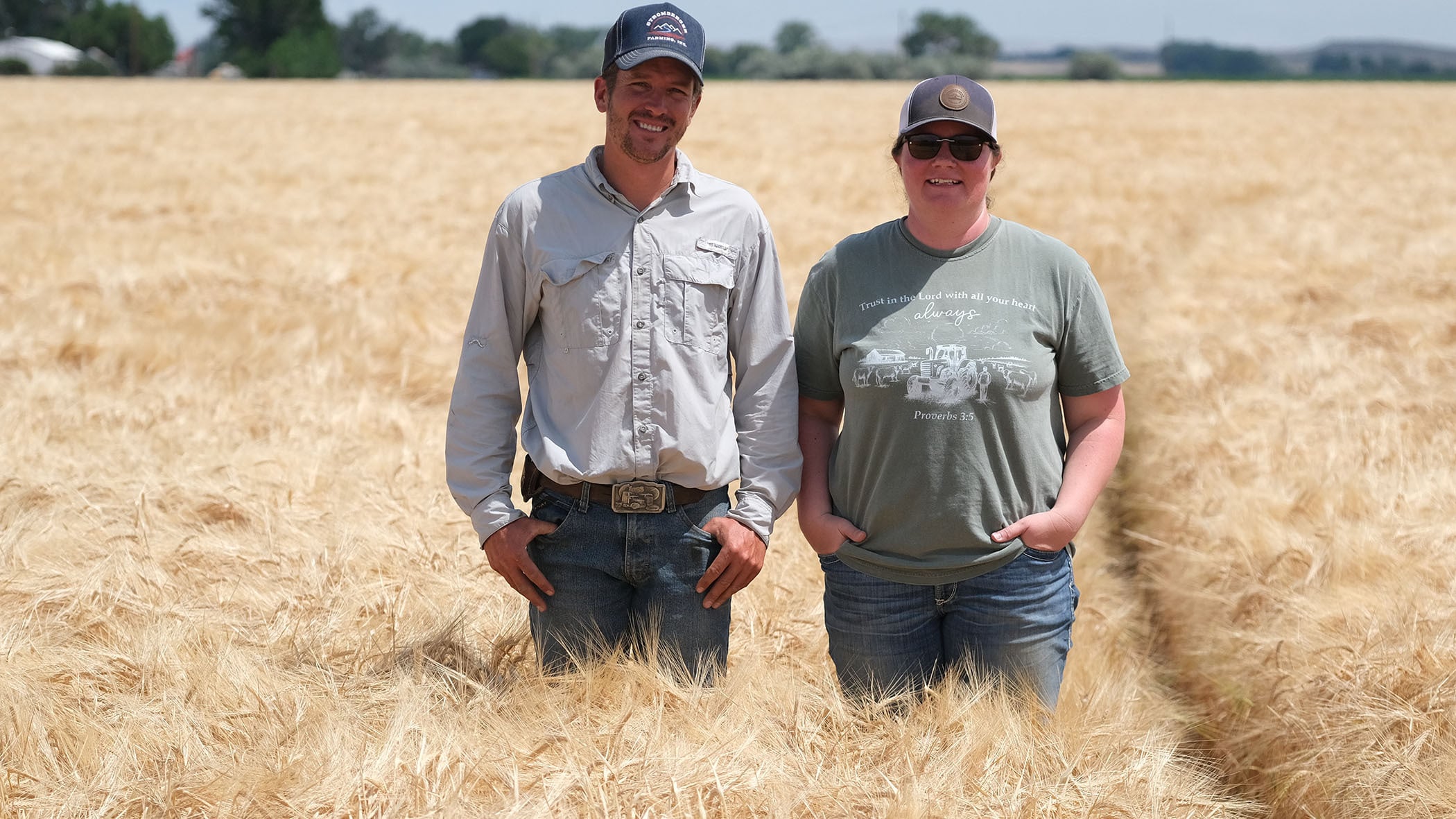
Stromberger Family Succession Plan
Packing up their fourth-generation farm and moving north to Powell, Wyoming, the Stromberger family didn’t let encroaching development end their farming legacy. Windsor, Colorado, sandwiched on the Front Range between Fort Collins and Denver, was an agriculture-based community where Harold Stromberger grew up and managed a farm operation he intended to eventually pass on to his son, Adam. Unfortunately, surrounding development and inaccessible water caused the family to look elsewhere.
When Harold and his wife, Debbie, first visited Powell, it reminded them of what the Front Range used to be like. “We started coming in this direction, and we noticed all the farm ground and thought, wow,” Debbie says.
One of the distinct differences between these communities is their water laws. In Windsor, Colorado, water rights can be sold separately from the land. “I farmed a lot of places that the water had been sold off of, so I was having to rent that back. And it was getting expensive to do that,” Adam recalls. “And now, from what I’ve heard, since we’ve left, it’s impossible to get any water rented back, because the cities need it all now.”
While some might respond to encroaching development by ending their farm operation altogether, farming has been the only path for the Strombergers. When faced with the choice of doing something other than farming, Adam stands firm that it was “not an option.”
In 2020, Harold and Debbie moved to Powell to continue farming in an area that would be supportive of agricultural producers. After finishing the harvest on their leased land, Adam and his wife, Katie, followed. Now the four of them live on and operate their new farm growing corn, beans, sugar beets, and barley. Although they considered moving to other neighboring states, they decided on Park County, Wyoming, to uphold many of their previous farming practices with better local support.
“The availability of water in Windsor, Colorado, was a lot shorter than what we experience here in Powell, Wyoming, too,” Katie compares. “We only had a couple of months of water down there in Windsor, compared to April through October here.”
The Wyoming Constitution and state law declare that the state owns all water and that rights to its use “shall attach to the land.” Colorado’s water law treats water rights as a distinct property interest that can be bought, sold, or transferred separately from the land, leading to the “Buy and Dry” bleeding of water from agricultural lands for city expansion.
The decision to move wasn’t just about water. With development surrounding the farm, it was difficult to drive a tractor down the road. “My biggest nightmare in the whole wide world is to see what happened to us down there happen here,” Debbie states. “To just see it totally enclose in development and have absolutely no way and no power to stop it.”
Encroaching development decreased the number of agricultural producers in Windsor, which negatively impacted the Strombergers’ sense of community. But with a stronger agricultural community in Powell, the Strombergers can truly belong and participate in their community. “You can usually walk in anywhere here and see somebody you know in the ag community. Down there, you don’t know anybody anymore,” Adam says.
Through resources like conservation easements and intentional succession planning, agricultural producers can take steps to help protect their land from subdivision and development. Park County Open Lands is committed to protecting and stewarding the landscapes of Park County for current and future generations by working with local agricultural producers.
Conservation Easements through Park County Open Lands
Easements are voluntary agreements that limit subdivision and development to protect conservation values such as agriculture, water resources, wildlife habitat, and open space. Landowners can continue ranching or farming, adapt practices over time, and pursue compatible income opportunities. The land can still be inherited or sold according to the landowner’s wishes, while the easement remains permanently attached to the property. Park County Open Lands is responsible for ensuring that easement terms are upheld by all future landowners.
Conservation easements may be donated, sold, or structured as a combination of both, offering meaningful financial and tax benefits. Qualified easements can provide income tax advantages and reduce property values enough to ease or eliminate estate and gift tax burdens. Proceeds from an easement sale can be used to reduce debt, invest in infrastructure, support retirement, equalize inheritances, all while keeping land more affordable for future agricultural use.
Join us for Lunch to Learn More
Is your operation prepared for the next generation — or just the next season?
If nothing changes, where will your land be in 10, 20, or 50 years?
Park County Open Lands has heard from local farmers and ranchers: planning for the future of your operation is essential to keeping agriculture strong in Park County. We invite you to join your neighbors for meaningful, community-centered conversations about succession planning over FREE lunch.
The forum will bring together farmers and ranchers of all generations to:
- Connect with local experts in accounting, estate planning, and financial management
- Hear real-world stories from local landowners
- Learn from Wesley Tucker, an expert in agricultural succession planning
- Converse with neighbors and get involved with the community
This event is particularly geared toward those with farms and ranches, so please extend the invite to your neighbors and families.
Succession Planning Forum
February 25, 11:30 am — 4:00 pm
Yellowstone Building at Northwest College
331 W 7th St, Powell, WY 82435
A Happy Hour at WYOld West will follow the forum — join us to keep the conversation going and continue networking with legal and tax professionals.
RSVP by February 16 to ensure we have a meal for you:
https://jhlandtrust.org/events/pcol-spf
Park County Open Lands
PCOL protects Wyoming’s iconic open spaces, supporting abundant wildlife, working agricultural lands, and strong communities. Northwest Wyoming is home to some of the world’s longest-known ungulate migration routes, many of which radiate from our national parks across a patchwork of private land. By partnering with local families, we safeguard clear-flowing water and essential wildlife habitat while protecting cultural legacies.
This article is proudly sponsored by