What Will it Take to Bring in a Second Airline to Cody?
Now that Yellowstone Regional Airport is well underway in discussions with Delta Airlines and others as a possible second carrier, it’s time to look at what it will take to bring them in.
The bottom line is that this is a pay-to-play game. When any business expands into new areas, that expansion carries risk. For airlines, expanding into a new location carries the risk of flights with empty seats. So, to manage that risk, airlines ask communities for Minimum Revenue Guarantees (MRGs).
What, exactly, is an MRG?
MRG stands for Minimum Revenue Guarantee. It’s a financial tool airports and communities use to support at-risk air service by reducing airlines’ risk on new routes. In other words, an MRG guarantees that an airline will receive at least a minimum level of revenue for operating a specific route. If actual revenue falls short of that level, the community pays the difference. If revenue exceeds the guarantee, no payment is needed.
This Minimum Revenue Guarantee is calculated by each flight, the fares and the seats filled. At the end of the quarter, they check the numbers. If enough seats were sold, then no funds from the MRG are paid to the airlines. If not, the MRG funds are paid to the airline to cover the revenue shortfall.
To help manage risk, airports often negotiate a cap in Minimum Revenue Guarantee (MRG) agreements. This cap limits how much the airport has to pay if not enough seats sell. In fact, the current MRG with United Airlines includes such a limit. This means both the community and the airline share the risks that come with expanding service.
When used, the MRG’s funds need to be replaced, but the MRG cannot legally obtain any funds directly from the airport. This responsibility falls to CYAIR (Cody Yellowstone Air Improvement Resources). CYAIR raises the money needed to keep the MRGs funded. Senator Hank Coe founded CYAIR and worked tirelessly with others, including Senator Al Simpson and Jim Neilson, to quietly encourage many of the community’s sustainers to make larger donations to the MRGs. However, with all three gone, we are looking at every possible situation from our traditional sources to grants to even possibly asking for a 1-cent tax that would sunset after the initial funding of the MRG.
How Much is an MRG?
The MRGs can range from a few hundred thousand dollars to nearly a million dollars. Bringing in daily Delta service will be on the upper end of that scale.
We want the community to understand that bringing Delta (or another airline) back will take time and commitment from all of us. We are already behind regarding securing an MRG to return Delta for the 2026 calendar year. While it is unlikely we can raise the necessary funds in time, this town has pulled together in the past to raise a million dollars or more in a weekend. So, we know it can happen, but how fast this happens is really up to the community. How soon do you want Delta back here?
New Type of Plane Needed to Meet Requirements
In addition to the MRG, Delta’s business model raises the bar by demanding business-class seating (first class, premium and economy). This was a reason they left the Cody airport in the past.
Currently, the most commonly used aircraft model at YRA is the CRJ200. For over a year now, SkyWest has been actively updating its fleet by converting CRJ700s to CRJ550s. The conversions include adding business-class seats and providing more room for carry-on luggage.
According to Wikipedia, “The reconfiguration addresses a shortcoming of the CRJ series: limited overhead storage. Four large storage cabinets are installed on the cabin floor, allowing passengers to stow their carry-on luggage inside the cabin. Aircraft with 50 or fewer seats require only one flight attendant. Because this aircraft has a sizable first-class section, where passengers might typically expect a flight attendant to be dedicated to only serving first-class passengers, the CRJ550 is equipped with a self-service galley area to be stocked with a selection of snacks and a refrigerator with non-alcoholic beverages, enabling first-class passengers to enjoy refreshments at their leisure, particularly when the flight attendant is serving the economy cabin.”
Essential Air Service Keeps Flights Flying in Winter
Yellowstone Regional Airport also benefits from being an airport designated as an Essential Air Service (EAS) provider during the winter. This means the US Department of Transportation (USDOT) helps to fund 14 flights a week in the winter to keep the planes flying. However, this does not apply to summer flights.
Decades ago, the city and the airport made the wise decision to opt into the EAS program. It was a one-time offer, and if you opt out at any time, you are out permanently. We have had air service each winter because of the EAS program.
How an EAS Works
The US Department of Transportation solicits proposals from airlines to provide service to a community. After the federal government receives the bids, the community is allowed to review them and make a recommendation. US DOT is not required to go with the low bid. The last few times that Cody’s contract was up for bid, only one airline submitted a proposal. In 2022, United; in 2024, SkyWest with United Service. Delta did not submit a proposal for the last two EAS service opportunities.
The advantage of being part of the federally funded EAS is the reliability of service during winter. The contract means the airlines won’t just leave because of financial issues. The EAS kept planes flying in and out of Cody during the pandemic when other airports were not so lucky. It’s also important to realize that those who bid on them genuinely want to be here serving our community.
When Might We See Connections to Salt Lake City?
The best guess is that in 2027, SkyWest will have enough CRJ 550s that Cody will be able to sign an MRG to regain the SLC service. In the meantime, we have much work to do in 2026 as a community to make this a reality.
What you can do to help:
- Donate to the MRG through CYAIR. We want to avoid needing to ask for a temporary tax.
- Continue to fly out of Cody as much as you possibly can. We want to show the airlines that there are enough people to fill seats, so they can take the risk of expanding here.
- Participate in upcoming surveys. We want to hear your thoughts.
- Stay informed. Follow along as this project progresses and join CYAIR’s fundraisers.
- Reach out to local, state, and federal representatives to let them know air service is important to you and to support legislation that helps keep the planes flying.
- If you use the United Chicago flight coming in 2026, you can show Delta that people in Cody do want to fly first class or economy plus by choosing those options.
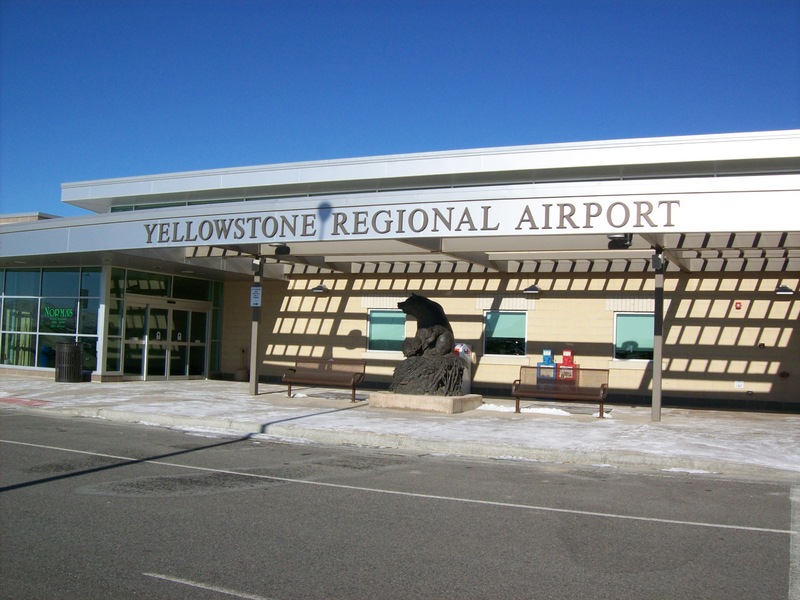
Yellowstone Regional Airport
Joint Powers Board
Yellowstone Regional Airport is owned by the City of Cody and operated by the Yellowstone Regional Airport Joint Powers Board. The City of Cody appoints four members to the Board while Park County appoints the other three. Established in 1981, the function of the Joint Powers Board is to plan for the future, and provide the means to operate and safely maintain an aviation facility adequate to the needs of the flying public.
This article is proudly sponsored by